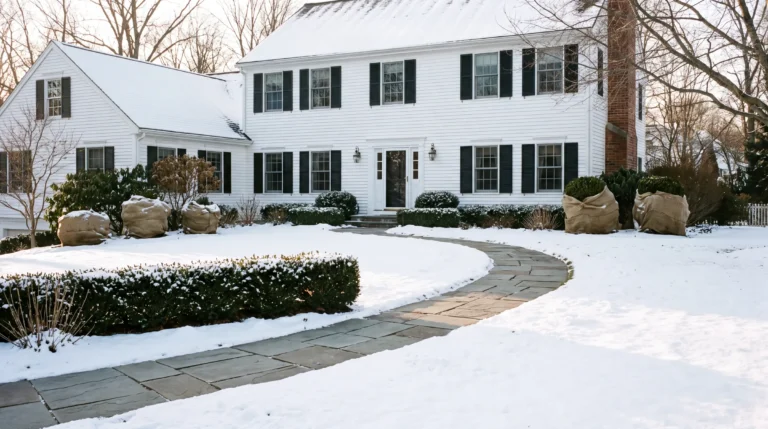
A professional spring cleanup clears out everything fall and winter left in your yard (leaves, branches, dead perennials, matted grass and early weeds), then prunes, edges, mulches and hauls it all away so your lawn and beds can grow clean. It is the reset every other spring job depends on. In eastern Connecticut it usually happens from late March through April, once the ground firms up.
At a glance
- A full spring cleanup covers lawn, beds, shrubs and the edges of the property, not just a leaf blow.
- The core steps: walkthrough, debris removal, cutbacks, pruning, lawn raking, weeding and edging, mulch and haul-away.
- It clears out disease, pests and smothering debris before new growth starts.
- Timing depends on soil, not the calendar. Wet clay should not be worked or walked on hard.
What a spring cleanup includes, step by step
1. Walk the property
A good crew starts by walking the whole yard. They look for broken limbs, dead patches, low spots where snowmelt pooled, heaved pavers and plow damage. That sets the order of work and flags anything that needs more than a cleanup.
2. Clear leaves and debris
Leaves blow into beds, under shrubs, along fences and against the foundation all winter. Left on the lawn, they block light and hold moisture on the grass. The crew clears lawn and beds down to the soil surface without tearing up new shoots.
3. Pick up branches and storm debris
Snow, ice and nor’easters drop a lot of wood. Small branches get gathered with the rest of the debris. Downed trees or large limbs are a separate job and belong with a storm clean-up crew.
4. Cut back perennials and ornamental grasses
Last season’s stems and foliage get cut back near the base before new growth comes up through them. Foliage that looked spotted or diseased last season should be bagged and removed, not left in the bed.
5. Prune dead, damaged and crossing wood
Broken, dead and rubbing branches come out on shrubs and small trees. Shrubs that flower on new growth can be shaped now. Spring bloomers like forsythia and lilac are left alone until after they flower.
6. Rake out the lawn
Matted, gray patches from snow mold get lightly raked so air and sun reach the crowns. Chunks of sod torn up by plows get set back or cleared, and bare spots are noted for repair or seeding.
7. Weed and edge the beds
Early weeds come out while they are small and the roots let go easily. Then each bed gets a crisp edge where it meets the lawn. That one step makes a property look cared for from the street.
8. Mulch
Beds get 2 to 3 inches of fresh mulch, pulled back a few inches from trunks and stems. If old mulch is still thick, the crew tops it up instead of piling more on. No volcano mulching against trees.
9. Haul it all away
Everything gets loaded up and removed, so you are not left with a pile of bags at the curb or a brush heap behind the shed.
Why a spring cleanup matters
- Your lawn gets light and air. Leaves and matted grass left in place can smother turf and keep snow mold going.
- Disease and pests lose their hiding spots. Many plant diseases and insects spend the winter in fallen leaves and old stems.
- Perennial crowns stay healthy. Wet mats of leaves sitting on crowns can cause rot.
- You find problems early. Drainage issues, heaved stones and broken limbs are easier to fix before plants leaf out.
- New projects start clean. Skipping the cleanup before planting or building a bed just buries old problems.
Rather have a crew handle it? High Vibe Gardens does this work across eastern Connecticut. Get a free walkthrough and same-day quote or call (860) 791-3191.
Spring cleanup timing in eastern Connecticut
Around Hebron, Columbia, Tolland and Mansfield, most properties sit on rocky glacial till with clay pockets. Clay holds water after snowmelt, and heavy foot traffic or equipment on wet ground packs it tight. A simple test: squeeze a handful of soil. If it drips or holds a sticky ball, give it a few more dry days.
Leaf load is the other big factor. Yards under oaks and maples often come out of winter with a thick, wet mat in every bed. Shaded and north-facing lots also dry out later than open, sunny ones. And a late snow in March or April is normal here, so a cleanup done too early can need a second pass.
One more thing. Some native bees and other helpful insects spend the winter in hollow plant stems. If you want to support them, leave a section of stems standing until the weather stays warm, then cut them back.
DIY or hire a crew?
A small yard with a few beds is a fine weekend job. A professional spring cleanup makes more sense when:
- The leaf load is more than you can rake and haul yourself
- You have slopes, long bed lines or a lot of shrubs to prune
- Branches are big, high or hung up in trees
- You have no truck or place to dump debris
- You want it done once, done right and done in a day or two instead of every weekend in April
What to ask before you book a crew
- Is this a full cleanup (beds, lawn, cutbacks, pruning, edging, mulch, haul-away) or just a leaf blow?
- Are you insured?
- Will I get a clear written estimate before work starts?
- How do you handle drainage problems or soil issues you find along the way?
- Do you offer ongoing maintenance after the cleanup?
- Do you use plants suited to Connecticut’s climate if beds need filling in?
It also pays to book early. Spring schedules fill fast, and a cleanup booked in the off-season gets a spot as soon as the ground allows.
When to call a pro
If your property came through winter with heavy leaf cover, broken branches, torn-up lawn edges or beds you cannot see the edges of anymore, a professional property cleanup is the fastest way to reset it. For downed trees and large limbs, our storm clean-up service handles the heavy lifting.
High Vibe Gardens is a family-owned crew based in Hebron, fully insured with $2M in liability coverage and 6 industry certifications. We serve homeowners throughout eastern Connecticut, including landscaping in Columbia, CT. Book a free on-site walkthrough and we will look over the property with you, share ideas and give you a same-day quote. Call or text (860) 791-3191.
Common questions
When is the best time for a spring cleanup in Connecticut?
In eastern Connecticut, late March through April is typical. The real signal is the soil: once it crumbles instead of dripping when you squeeze it, the yard is ready.
Do I need a spring cleanup if I had a fall cleanup?
Usually yes, though it is often lighter. Winter still drops branches, blows leaves into beds and leaves perennials and grasses to cut back.
How long does a spring cleanup take?
It depends on the size of the property, the leaf load and how many beds and shrubs need work. A walkthrough gives you a clear scope and quote before anything starts.
Does a spring cleanup include mulching?
Many do, but not all. Ask whether mulch, edging, pruning and haul-away are included so you know exactly what you are getting.
Can I leave leaves in my garden beds?
A thin layer of shredded leaves in beds works like mulch. Thick mats of whole leaves on the lawn or piled over plant crowns should come out.