A spring landscaping checklist for eastern Connecticut runs from March to May: clear winter debris, check drainage, cut back perennials, prune the right shrubs, edge and mulch beds, then repair and feed the lawn once the soil warms. The order matters more than the speed. Working soggy ground or planting before the last frost does more harm than waiting a week.
At a glance
- March: walk the property, pick up debris, note where water pools, and stay off soggy lawn.
- April: cut back perennials and grasses, prune summer-flowering shrubs, edge beds and rake out matted grass.
- May: mulch 2 to 3 inches deep, plant tender annuals after the last frost, and mow high.
- Later: save big lawn seeding for late summer to early fall, when cool-season grass does best.
Before the checklist: what winter left behind
Connecticut winters do not just pause your yard. Snow weight, freeze-thaw cycles and months of wet ground leave marks. Before you start the checklist, look for:
- Compacted, stressed soil where snow was piled or people walked
- Dead or matted grass (often snow mold)
- Broken or bent branches on trees and shrubs
- Leaves and debris packed into beds and along fences
- Low spots where snowmelt pooled
- Pavers, steps and walkway stones pushed up by frost
None of these look serious in March. Left alone, they turn into bigger and more expensive problems by summer.
March: walk the yard and clear debris
Do a slow walkthrough
Walk every side of the house with your phone. Take photos of damage, dead patches and wet spots. That list becomes your plan for the rest of spring.
Use the squeeze test before you work soil
Grab a handful of soil from a bed and squeeze. If water drips out or it holds a sticky ball, wait. Digging, tilling or even walking on wet clay packs it down and squeezes out the air roots need. If it crumbles apart, you are ready.
Pick up leaves, branches and storm debris
Leaves and organic buildup from fall and winter smother grass and bed plants. Rake them out of beds, from under shrubs and along the foundation. Pick up fallen branches so they do not end up under the mower.
Watch where the water goes
Snowmelt shows you exactly where water collects. Pooling water can kill grass, rot plant roots and push moisture toward your foundation. Check that downspouts drain away from the house and note any low spots to fix before you plant.
Rather have a crew handle it? High Vibe Gardens does this work across eastern Connecticut. Get a free walkthrough and same-day quote or call (860) 791-3191.
April: the core of your spring landscaping checklist
Lawn
- Lightly rake matted, gray patches so air and light reach the crowns. Most snow mold grows out once the lawn dries.
- Fill small low spots with a thin layer of topsoil.
- Get a soil test (UConn runs a soil testing lab) before you add lime or fertilizer. Many eastern CT soils run acidic, but test instead of guessing.
- Apply crabgrass preventer around the time forsythia blooms. It also stops grass seed from sprouting, so do not use it where you plan to seed unless the label says it is safe for new seed.
Beds
- Cut back last season’s perennials and ornamental grasses before new growth gets tall.
- Pull early weeds while they are small and the soil is soft.
- Redefine bed edges. Winter blurs the line between lawn and bed, and a clean edge makes the whole yard look finished.
Trees and shrubs
- Remove broken, dead and diseased branches first.
- Prune shrubs that bloom on new growth, like panicle and smooth hydrangeas.
- Wait on spring bloomers like forsythia, lilac and azalea until right after their flowers fade, or you cut off the show.
- Leave large limbs, or anything you need a ladder for, to a pro.
Hardscape
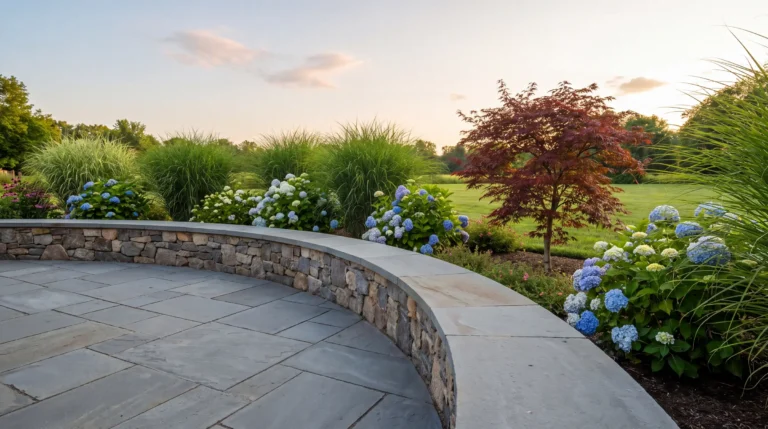
Freeze-thaw cycles shift pavers, stones and walkways. Reset trip hazards early. A retaining wall that is leaning, bulging or dropping stones needs a closer look before it gets worse.
May: mulch, plant and mow
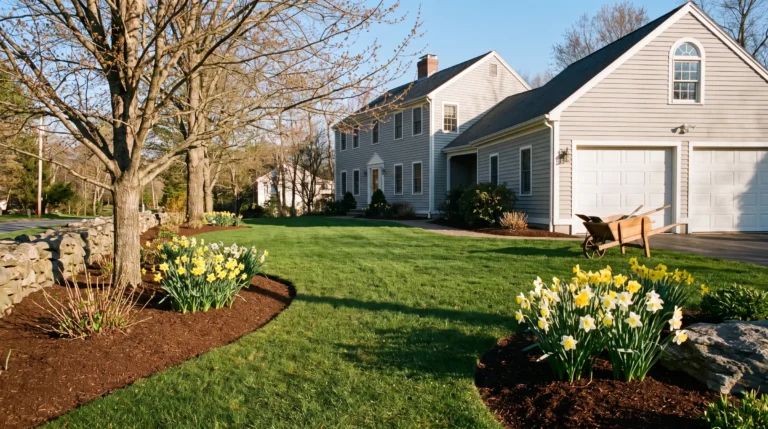
- Mulch: spread 2 to 3 inches over beds. Pull it back a few inches from trunks and stems. Never pile it in a volcano against a tree.
- Plant: trees, shrubs and hardy perennials can go in once the soil is workable. Tender annuals and vegetables wait until after the last frost, which in most of eastern Connecticut lands around mid-May. Low frost pockets can run later.
- Mow: keep cool-season grass around 3 inches or a bit higher, and never cut more than a third of the blade at once. Taller grass shades out weeds.
Spring landscaping timing in eastern Connecticut
Spring does not arrive all at once around here. A sunny, south-facing yard in Willimantic or Mansfield can be ready to work well before a shaded lot on a hillside in Tolland, Willington or Hebron. Low spots hold frost and water longer than high ground.
The soil matters too. Much of the area sits on rocky glacial till with clay pockets and ledge close to the surface. Clay stays wet late and compacts easily, so the squeeze test is worth doing every time. Heavy oak and maple leaf drop means beds often hold a thick, wet mat by spring. And a late snow in March or even April is normal, so hold off on tender plants no matter how warm one week feels.
Common spring mistakes to skip
- Waiting too long to schedule work, then finding every crew booked
- Ignoring drainage and hoping it dries out
- Seeding or planting too early
- Skipping cleanup before starting new projects
- Pruning spring-flowering shrubs before they bloom
- Piling mulch against trunks
- Treating symptoms, like reseeding the same dead patch, instead of fixing the cause
After the checklist: bigger projects
Once your property is cleaned, assessed and stable, it becomes a good base for bigger work. Spring is when a lot of homeowners decide to add new garden beds, redesign a tired front yard, put in stonework or pathways, build a quiet outdoor space, or swap high-maintenance areas for lower-maintenance planting. Getting the basics done first means the new work starts on solid ground.
When to call a pro
Most of this checklist is doable on a weekend. Call in help when the leaf load is more than you can haul, when branches are big or high, when water keeps pooling in the same place, or when a wall or walkway is moving. That is where a professional property cleanup or new garden bed planting and mulching saves you time and gets it right.
High Vibe Gardens is a family-owned crew based in Hebron, serving eastern Connecticut. We are fully insured with $2M in liability coverage. If you are nearby, see our landscaping services in Hebron, CT, then book a free on-site walkthrough. We will walk the property with you, share design ideas and give you a same-day quote. Call or text (860) 791-3191.
Common questions
When should I start spring yard work in Connecticut?
Start once the snow is gone and the soil crumbles when you squeeze it, usually late March into April in eastern Connecticut. You can pick up debris earlier as long as you stay off soggy lawn.
Should I seed my lawn in the spring?
Spring is fine for patching small bare spots. For larger overseeding, late summer to early fall gives cool-season grass a much better start. Do not use crabgrass preventer where you seed unless the label says it is safe for new seed.
How deep should mulch be?
Spread 2 to 3 inches over beds and keep it pulled back a few inches from trunks and stems. Deeper mulch or mulch piled against bark can hold moisture and harm the plant.
When is it safe to plant annuals in eastern Connecticut?
Wait until after the last frost, which in most of eastern Connecticut is around mid-May. Low spots that hold cold air can see frost later, so watch the forecast.