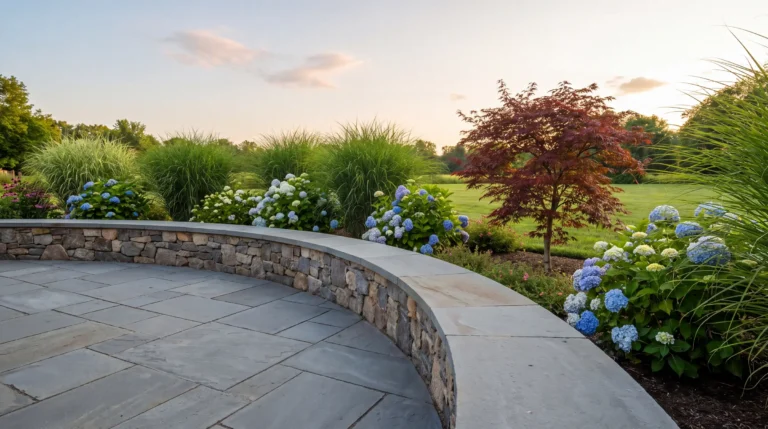
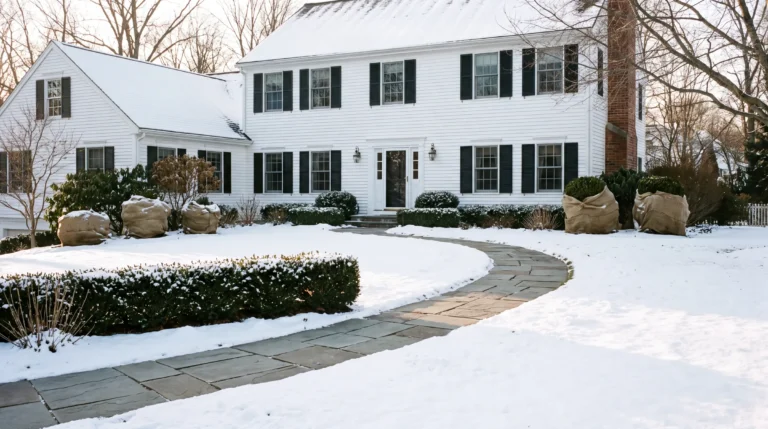
Commercial landscaping covers the regular care that keeps a business property, HOA or multi-unit site clean, safe and inviting: mowing and lawn care, bed maintenance and mulching, pruning, seasonal cleanups, planting and repairs like retaining walls. For property managers in eastern Connecticut, the best results come from a written seasonal plan with a clear scope, built around local soils and weather, and a contractor who is insured and easy to reach. The goal is a property that looks cared for every week, not just the week after a big project.
At a glance
- Get the scope in writing: what is done, how often and what is not included.
- Plan by season: spring cleanup, summer maintenance, fall cleanup, storm response.
- Put safety first: clear walkways, sightlines, drainage and trimmed shrubs.
- Choose plants that handle zone 6 winters, clay and road salt.
- Hire an insured local crew and ask for the certificate.
What commercial landscaping should include
Every property is different, but a solid maintenance scope usually covers:
- Lawn care and mowing. Regular mowing at the right height, edging along walks and curbs and trimming around signs, poles and buildings.
- Bed maintenance. Weeding, edging and mulching beds 2 to 3 inches deep, with mulch kept off trunks and stems.
- Pruning and shrub care. Shaping shrubs, removing dead or broken branches and keeping plants off walkways, windows and signs.
- Seasonal cleanups. Spring cleanup to reset beds after winter, and fall cleanup to clear leaves before snow.
- Planting. Seasonal color, replacing dead plants and new garden beds where the property needs them.
- Hardscape and grading. Retaining walls, excavation and drainage fixes where slopes, washouts or failing walls are a problem.
- Storm clean-up. Fast debris removal after wind, rain and ice storms.
Handing all of this to one contractor means fewer vendors to manage and fewer gaps between them.
Curb appeal and first impressions
For a business, the landscape is the first thing people see. A tidy entrance tells customers and tenants that the property is well run. An overgrown one says the opposite, before anyone walks in the door.
- Keep the entrance, signs and main walkways the sharpest parts of the property.
- Use crisp bed edges and fresh mulch. They do more for appearance than almost anything else.
- Repeat a small number of plants in groups instead of mixing many one-offs. It reads cleaner and is easier to maintain.
- Replace dead or struggling plants quickly. One brown shrub by the door stands out.
- Add native perennials like black-eyed Susan, New England aster and butterfly weed for color that handles local conditions with less watering once established.
Rather have a crew handle it? High Vibe Gardens does this work across eastern Connecticut. Get a free walkthrough and same-day quote or call (860) 791-3191.
Safety and liability on business properties
Good landscaping is also risk management. Watch for these:
- Walkways. Keep them clear of overgrown shrubs, wet leaves, debris and tripping hazards.
- Sightlines. Trim shrubs near driveway entrances and parking lot exits so drivers can see traffic and pedestrians.
- Drainage. Clear catch basins and swales, and fix low spots where water pools and later freezes.
- Dead limbs. Flag damaged branches over parking areas and walks for removal.
- Retaining walls. Watch for leaning, bulging or cracking, which can mean drainage behind the wall is failing.
A seasonal commercial landscaping plan for eastern Connecticut
Much of eastern Connecticut sits in USDA hardiness zones 6a and 6b. Winters bring snow, ice, freeze-thaw cycles and plenty of road salt. Summers can swing from humid to dry. Soils are often rocky glacial till with clay pockets and ledge near the surface, so drainage varies a lot, even across one lot. A plan built for these conditions looks like this:
Spring
- Clean up winter debris, sand and salt damage along walks and lots.
- Cut back grasses and perennials left standing over winter.
- Edge and mulch beds, and replace plants lost to winter or salt.
Summer
- Regular mowing, trimming and weeding.
- Pruning to keep plants off walks, windows and signs.
- Watch new plantings for stress during dry stretches.
Fall
- Late summer to early fall is the best time to seed thin lawns, since cool-season grasses root well then.
- Fall cleanup: leaves off lawns, beds and walks, catch basins cleared and a final mow.
- Cut back perennials and top up mulch before winter.
After storms
- Debris removal from walks, lots and beds, plus a check of trees, shrubs and walls for damage.
Plant choice matters too. Beds along walks and parking areas take road salt all winter, so pick tougher, salt-tolerant plants for those edges. Native plants adapted to Connecticut often hold up better over time with fewer inputs. UConn’s Connecticut native perennial, tree and shrub availability list is a good resource. If your site has wetlands nearby or stormwater rules, check with your town before changing grading or clearing near them.
What to ask a commercial landscaping contractor
- What exactly is included in the scope, and how often is each task done?
- What is not included, so there are no surprises?
- Are you insured, and can you send a certificate of insurance?
- Who is my point of contact, and how fast do you respond?
- How do you handle storm damage and seasonal cleanups?
- How do you schedule work to avoid disrupting tenants, customers or business hours?
- Do you have experience with native and low-maintenance plantings?
- Can you handle drainage, grading or retaining wall issues if they come up?
A good contractor will answer these plainly and put the answers in writing.
When to call a pro
If your current vendor misses visits, the scope is fuzzy, or the property looks tired no matter what, it is time for a fresh look. High Vibe Gardens is a family-owned, local crew based in Hebron with $2M in liability insurance and 6 industry certifications. We provide landscape and lawn maintenance, property cleanup, garden bed planting and mulching, storm clean-up and nursery and plant care. For walls and grading, our retaining walls and excavation work is done with our local partner, Tom Sullivan.
We work with property managers, HOAs and small businesses across eastern Connecticut, from Hebron to Columbia, Tolland, Mansfield, Willimantic, Willington, Ellington, Chaplin and Southington. Call or text (860) 791-3191 or contact us to book a free on-site walkthrough. We will walk the property with you, share design ideas and give you a same-day quote.
Common questions
What does commercial landscaping maintenance include?
Usually mowing and edging, bed weeding and mulching, pruning, spring and fall cleanups, planting and storm clean-up. The exact scope and frequency should be written into your agreement.
How often should a commercial property be maintained?
Most properties need regular visits through the growing season for mowing and bed care, plus spring and fall cleanups. High-traffic entrances may need more frequent attention.
What plants work best for commercial properties in Connecticut?
Tough, low-maintenance plants hardy to zones 6a and 6b, including natives like black-eyed Susan, New England aster and butterfly weed. Use salt-tolerant plants along walks and parking areas.
What should I ask before hiring a commercial landscaper?
Ask what is included and excluded, how often each task happens, who your contact is, how they handle storms and seasonal work, and ask for a certificate of insurance.