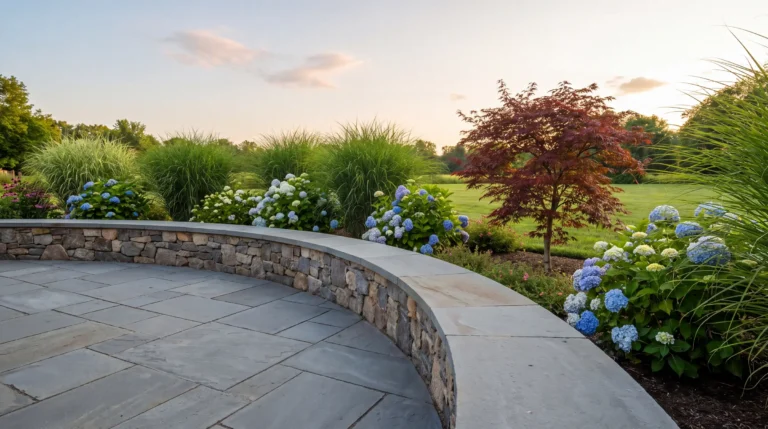
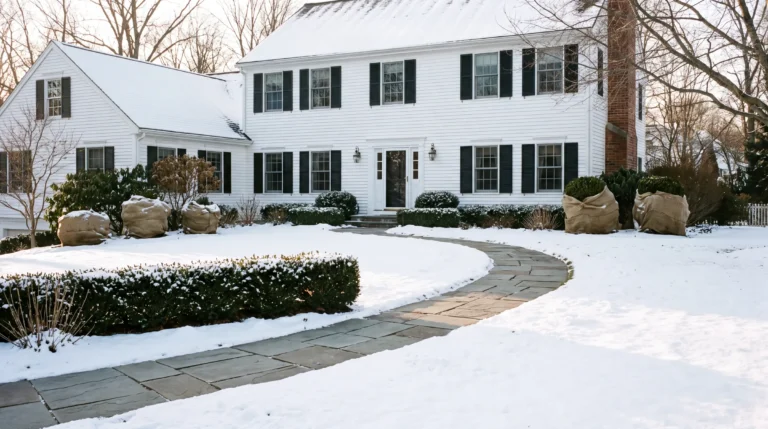
A fall cleanup clears leaves and debris off lawns and beds, cuts back perennials, trims shrubs, edges and mulches beds, and finishes with a final mow so your property goes into winter clean and comes out ready for spring. In eastern Connecticut the best time is after most leaves have dropped, usually late October into November, and before the ground freezes or the first real snow. Homes and commercial properties need the same basics, with extra focus on walkways, drains and parking areas for businesses.
At a glance
- Remove leaves from lawns and beds. A wet leaf mat left on grass all winter smothers it.
- Cut back most perennials, but leave ornamental grasses and some seed heads standing.
- Do not prune spring-flowering shrubs in fall. You would cut off next spring’s flowers.
- Finish with a final mow a little lower than your summer height.
- Clear walkways, catch basins and drains, especially on commercial sites.
What a fall cleanup includes
A proper fall cleanup goes well beyond blowing leaves around. Here is the full scope:
Leaf and debris removal
Leaves, branches, weeds and litter come off the lawn, beds, walkways and hardscapes and are hauled away. Organic waste gets recycled or composted where possible. On a property with a lot of oaks, this may take two visits, since oaks hold their leaves later than maples.
Cutting back perennials
- Cut back: hostas, daylilies, peonies, bee balm and other perennials that go limp or mushy after frost. Peony and bee balm foliage can carry disease into next year, so clearing it helps.
- Leave standing: ornamental grasses, coneflowers, black-eyed Susans and sedum. They add winter interest, feed birds and protect the crown. Cut them back in early spring instead.
Shrub trimming and pruning
Light shaping of summer-flowering shrubs and removal of dead, broken or rubbing branches. Hold off on lilac, forsythia, rhododendron, azalea and other spring bloomers. They have already set next year’s flower buds.
Edging and mulching
A clean bed edge keeps grass from creeping in and helps crews find the bed line after snow. Top up mulch to 2 to 3 inches. Keep it pulled back a few inches from trunks and stems. Mulch piled up against a tree like a volcano traps moisture and invites rot and pests.
Weeds and invasive plants
Weeds and invasives like Oriental bittersweet are pulled or cut before they drop more seed. Fall is a good time to spot bittersweet, since its orange and red berries stand out once other leaves are gone.
Final mow
The last mow of the season drops the lawn a little lower than your summer height, to roughly 2 to 2.5 inches. Shorter grass going into winter is less likely to mat down under snow and develop snow mold. Do not scalp it, though. Cutting too low stresses the turf.
Fall cleanup for commercial properties
Retail plazas, offices, HOAs and multi-unit properties have the same needs as a home, plus a few more:
- Slip hazards. Wet leaves on sidewalks, stairs and entrances are slick. Clearing them protects employees, tenants, customers and you.
- Drains and catch basins. Leaves clog parking lot catch basins and swales, so water pools and later freezes. Keeping them clear is part of a good commercial cleanup.
- Curb appeal. A messy entrance leaves a poor first impression on anyone who pulls in.
- Salt-exposed beds. Beds along walks and parking areas take road salt all winter. A clean, well-mulched bed recovers better in spring.
- Reliable scheduling. Commercial sites run on timelines. The cleanup should be scheduled and communicated so the property never looks forgotten.
Rather have a crew handle it? High Vibe Gardens does this work across eastern Connecticut. Get a free walkthrough and same-day quote or call (860) 791-3191.
Timing your fall cleanup in eastern Connecticut
Eastern Connecticut sits mostly in USDA hardiness zones 6a and 6b, with heavy leaf drop from oaks, maples and hickories. A few local timing tips:
- Go late, not early. A cleanup in early October just gets buried again. Most properties do best once the bulk of the leaves are down, often late October through November.
- Heavy leaf lots may need two passes. One visit for the maples, one for the oaks.
- Beat the freeze. Leaves frozen to the lawn or buried under an early snow are much harder to remove, and they sit there until spring.
- Seed earlier. If your lawn needs aeration and reseeding, that is best done in late summer to early fall, when cool-season grasses root well. By a late-fall cleanup, it is usually too late for new seed to establish before winter, so plan that work for the next window.
- Clay and ledge. Much of the area has rocky glacial till with clay pockets. Leaves left on beds and low spots hold water, so clearing them helps soil drain and warm up faster in spring.
What is not part of the job
Be clear on scope before you book. Gutter cleaning is not part of our fall cleanup service. Clogged gutters can still cause water damage, so book a gutter or roofing company for that. On our end, we make sure downspout outlets, drains and swales at ground level are clear of leaves.
Why it is worth doing every year
- Healthier lawn. Grass gets light and air instead of dying under a leaf mat.
- Fewer pests and disease. Debris and dead foliage give pests and fungal disease a place to overwinter.
- Less spring work. A clean property in fall means a faster, cheaper spring cleanup.
- Safer walkways and lots. Less slip risk and fewer drainage problems all winter.
- Better curb appeal. For homes and businesses alike.
For water-wise ideas as you plan next year, the EPA WaterSense landscaping tips are a good start. For invasive plants, see the Connecticut Invasive Plant Working Group.
When to call a pro
If you have more leaves than you can bag in a weekend, a commercial property to keep safe, or beds that need real cutting back and mulching, a crew makes quick work of it. High Vibe Gardens is a family-owned, insured crew based in Hebron with $2M in liability insurance. Our property cleanup and lawn and landscape maintenance services cover leaf and debris removal, cutting back, pruning, edging, mulching and the final mow.
Before you book any fall cleanup, ask:
- Is this a full cleanup (leaves, beds, pruning, edging, mulch) or just leaf blowing?
- How many visits will my property need?
- What gets cut back and what is left standing?
- Are you insured, and can I see the certificate?
- How do you dispose of leaves and debris?
We serve homes and businesses across eastern Connecticut, including Mansfield, Hebron, Columbia, Tolland and nearby towns. Call or text (860) 791-3191 or contact us for a free on-site walkthrough and a same-day quote.
Common questions
When should I schedule a fall cleanup in Connecticut?
In eastern Connecticut, late October through November usually works best, once most leaves have dropped and before the ground freezes. Properties with a lot of oaks may need a second visit.
What should I cut back in the fall?
Cut back hostas, daylilies, peonies and other perennials that turn mushy after frost. Leave ornamental grasses, coneflowers and sedum standing until early spring.
How short should the last mow of the year be?
Drop the final mow to roughly 2 to 2.5 inches, a little lower than summer height. Avoid scalping, which stresses the turf.
Can I leave leaves on my lawn over winter?
A light layer shredded by the mower is fine, but a thick wet mat will smother grass and encourage snow mold. Remove heavy leaf cover before snow.
Does a fall cleanup include gutter cleaning?
Not with us. Our fall cleanup covers the ground: lawns, beds, walkways and drains. Book a gutter or roofing company for gutters.