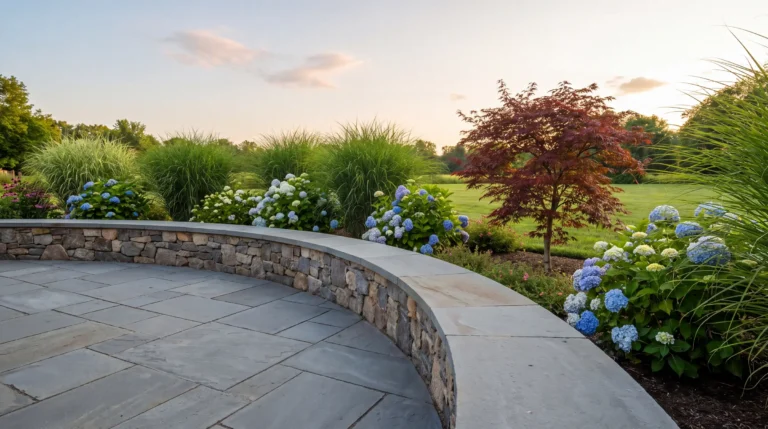
Good Tolland CT landscaping starts with the ground you actually have: rocky glacial soil, sloped lots, tall trees and a lot of deer. Get the drainage, the shade and the leaf load under control first, then plant things that like those conditions. Do that and your yard gets easier to care for every season instead of harder.
At a glance
- Walk the yard after a heavy rain. Wet spots near the house come before any new planting.
- Match plants to shade, wet soil and deer pressure, not to a picture from a catalog.
- Mulch 2 to 3 inches deep and keep it off trunks and stems.
- Clear heavy leaf mats before snow so the lawn and beds can breathe.
- Pull invasives like burning bush, Japanese knotweed and bittersweet early.
What makes Tolland CT landscaping different
Tolland sits in the hilly middle of Tolland County. Most lots here share a few traits, and each one changes how a yard should be built and cared for. (For the services we offer in town, see our Tolland landscaping services page.)
- Rocky glacial till. Dig a bed and you hit stones, sometimes ledge. Topsoil can be thin, so new beds often need added compost and loam.
- Clay pockets. Some spots drain fine, and ten feet away the soil holds water for days.
- Slopes. Many homes sit on a grade, which moves water and mulch downhill every storm.
- Wooded lots. Oaks and maples mean shade, root competition and a big leaf drop each fall.
- Deer. If it is tender and near the woods line, expect it to get browsed.
Tolland is USDA hardiness zone 6, with cold winters, freeze and thaw cycles and the odd nor’easter. Pick plants rated for that and you avoid a lot of spring replacements. The Town of Tolland site is also worth a look for leaf and brush drop-off info and any rules near wetlands.
Fix drainage and wet spots first
Tolland’s slopes and tree cover can hide poor drainage. Water that runs toward your foundation will cause trouble long before you notice it in the basement.
How to check your yard
- Walk the property during or right after a heavy rain.
- Look for puddles that last more than a day, muddy strips and mulch that washes out of beds.
- Watch where each downspout drains. If it dumps at the foundation, route it farther out.
- Check new patios, walkways and driveways. They should slope away from the house.
Common fixes
- Regrade soil so it falls away from the house.
- Add a dry well or French drain where water has nowhere to go.
- Terrace a steep slope with a retaining wall so rain soaks in instead of running off.
- Plant shrubs that tolerate wet feet, like red osier dogwood, in soggy low spots.
- Choose permeable pavers for new hardscape when you can.
Rather have a crew handle it? High Vibe Gardens does this work across eastern Connecticut. Get a free walkthrough and same-day quote or call (860) 791-3191.
Landscaping for shade and wooded lots in Tolland
Hillsides and tree cover create shady zones that stay damp. North-facing walls grow moss, and grass thins out under big canopies.
- Thin dense shrubs near the house so air moves and siding dries.
- Stop fighting for grass in deep shade. A mulched bed with hosta and ferns looks better and takes less work.
- Keep an eye on mature trees near the house. Lifting walkways or deep cracks can point to root trouble, and a certified arborist can tell you if a tree is a risk.
- Do not pile soil or mulch over tree roots. It starves them of air.
Leaf load, lawns and mulch
Handle the fall leaf drop
Wooded Tolland lots can put down a thick layer of leaves. A light layer can be mowed and shredded into the lawn. A heavy, wet mat left through winter smothers grass and invites snow mold. Clear it before the first real snow, and clear beds and drainage paths too.
Skip the over-fed lawn
A “perfect” lawn pushed with too much fertilizer can burn, and the runoff ends up in local streams. For cool-season grass in eastern Connecticut, feed lightly, lean on fall as your main feeding, and get a soil test (UConn runs one) before adding lime or fertilizer. Late summer to early fall is the best time to aerate and overseed.
Mulch the right way
- Spread mulch 2 to 3 inches deep.
- Keep it a few inches back from trunks and stems. No “volcano” mounds.
- Top up thin spots each spring instead of piling fresh mulch on old mulch year after year.
Plants for Tolland yards, deer and invasives
Native plants handle Tolland’s soil and winters with less water and fewer chemicals. Good options include mountain laurel, switchgrass and black-eyed Susans. They resist local pests and feed pollinators.
For deer, no plant is fully safe, but some get browsed far less. Ornamental grasses, ferns, catmint, daffodils and many fragrant herbs are a safer bet than hostas and arborvitae near the woods line.
Watch for invasives that spread fast in mixed-wood lots: burning bush, Japanese knotweed and Oriental bittersweet. Pull or cut them at the first sign, bag the roots and seed heads, and replace them with native shrubs.
Get ready for a Tolland winter
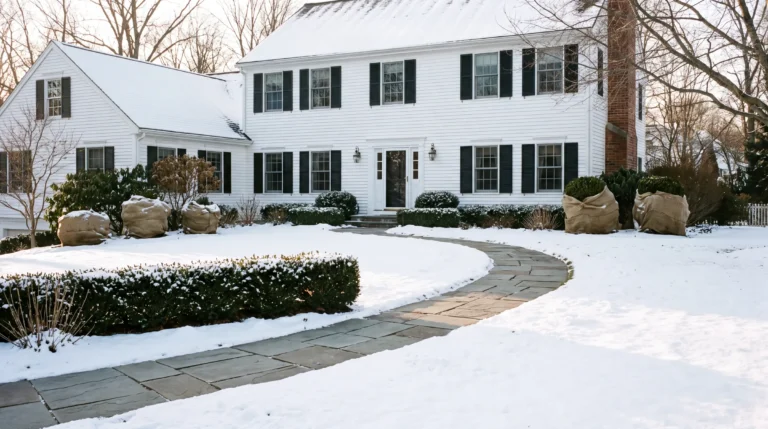
- Wrap tender evergreens in burlap to cut wind and road salt damage.
- Mulch perennial beds after the ground cools to limit frost heave.
- Drain hoses and shut off outdoor water lines.
- Keep salt-tolerant plants along the driveway and road edge.
- Walk the yard after a storm and deal with fallen limbs before they kill the grass below.
When to call a pro for Tolland CT landscaping
Plenty of this is weekend work. Bring in help when water is heading toward the house, a slope keeps washing out, or the leaf load and overgrowth are more than you can keep up with.
High Vibe Gardens is a family-owned crew based nearby in Hebron. We handle property cleanup, bed planting and mulching, lawn maintenance and retaining walls and excavation for sloped lots. We carry $2M in liability insurance and hold 6 industry certifications. See what we do around town on our Tolland CT landscaping page.
Not sure where to start? Book a free on-site walkthrough. We will look at the drainage, shade and soil, share design ideas and give you a same-day quote. Call or text (860) 791-3191 or send us a message.
Common questions
What is the best time to plant in Tolland, CT?
Spring and early fall are the best times for trees, shrubs and perennials. For lawns, late summer to early fall is the best window to seed, because the soil is warm and the air is cooler.
How do I stop deer from eating my Tolland landscaping?
Pick plants deer tend to skip, like ornamental grasses, ferns, catmint and daffodils, and keep favorites like hostas and arborvitae close to the house. No plant is fully deer-proof, so fencing or repellents help in high-pressure spots.
Why does my Tolland yard stay wet after rain?
Rocky glacial till, clay pockets, ledge and slopes can all trap or funnel water. Regrading, routing downspouts farther out and adding plants that tolerate wet soil are the usual fixes.
Should I leave fall leaves on my lawn?
A light layer can be mowed and shredded into the grass. A thick mat should come off before snow, because it smothers the lawn and can lead to snow mold.
Does High Vibe Gardens work in Tolland?
Yes. We are based in Hebron and serve Tolland and nearby towns. We offer a free on-site walkthrough with a same-day quote.