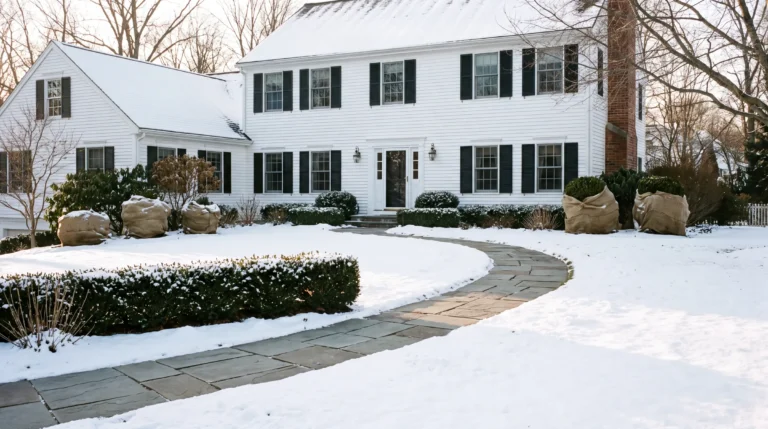
A good lawn care schedule for Connecticut follows the growth of cool-season grass: clean up and prevent crabgrass in spring, mow high and water deeply through summer, then seed, aerate and feed in late summer and fall. Fall is the most important season for a CT lawn, because cool nights and warm soil build the roots that carry grass through the next summer.
At a glance
- March to April: rake out debris and salt, soil test, apply crabgrass preventer as soil warms.
- May to July: mow at 3 to 3.5 inches, water 1 inch a week, handle grubs in early summer.
- Late August to September: the best window to overseed, aerate and fertilize.
- October to November: keep leaves off the grass, mow until growth stops, winterize.
- December to February: stay off frozen turf and plan ahead.
Why Connecticut lawns need a seasonal schedule
Most Connecticut lawns are cool-season grasses: Kentucky bluegrass, perennial ryegrass, tall fescue and fine fescues. They grow hard in spring and fall, slow down in summer heat, and go dormant in winter. A lawn care schedule that follows that cycle does the right job at the right time, so you are not fighting drought stress, weeds or grubs after the fact.
Spring lawn care schedule (March to May)
Early spring cleanup
- Rake out leaves, sticks and winter debris once the ground firms up.
- Flush road salt damage along the street and driveway with water, and rake sand off the edges.
- Stay off soggy turf. Walking on wet soil compacts it.
Soil test
Eastern Connecticut soils tend to run acidic. A soil test tells you if you need lime and how much. The UConn Soil Nutrient Analysis Laboratory runs home lawn tests. Lime can go down in spring or fall.
Crabgrass preventer
Apply pre-emergent weed control when soil temperatures reach about 55 degrees, which usually lines up with forsythia blooming. Keep in mind most crabgrass preventers also stop grass seed from sprouting, so do not use one on areas you plan to seed in spring.
First mow and light feeding
- Start mowing once the grass is actively growing and set the deck to 3 to 3.5 inches.
- If you feed in spring, use a light, slow-release fertilizer in May. Heavy spring feeding pushes top growth at the expense of roots.
Rather have a crew handle it? High Vibe Gardens does this work across eastern Connecticut. Get a free walkthrough and same-day quote or call (860) 791-3191.
Summer lawn care (June to August)
Mow high, never scalp
Keep the lawn at 3 to 3.5 inches and never cut more than one-third of the blade at a time. Taller grass shades the soil, holds moisture and crowds out weeds. Keep your mower blade sharp so it cuts cleanly instead of tearing.
Water deeply and early
Give the lawn about 1 inch of water a week, rain included, in one or two deep soakings. Water in the early morning. During a long dry spell, cool-season grass may go brown and dormant. That is normal, and it usually greens up when rain returns.
Grub timing
White grubs feed on roots in late summer. Preventive grub products go down in June or July, before eggs hatch. If you skip prevention, check for grubs in late August by lifting a square of sod. Curative treatments work best while grubs are small and near the surface in late summer and early fall.
Skip heavy fertilizer in midsummer
Feeding in July heat stresses cool-season grass and can burn it. Save it for late summer.
Fall lawn care schedule (late August to November)
This is the part of the calendar that matters most. Warm soil and cool nights are ideal for seed and roots, and weeds are winding down.
Overseed and repair
Late August through September is the best time to plant grass seed in Connecticut. Seed thin spots and bare patches then. For the full how-to, read our guide on the best time to plant grass seed in Connecticut.
Aerate and dethatch
Core aeration relieves compacted soil and gives seed a place to land, so do it right before you overseed. Dethatch only if the layer of dead stems at the soil surface is thicker than about half an inch.
Fertilize
Early fall is the best time to feed a CT lawn. A second, lighter feeding in mid to late fall, while grass is still green, helps roots store energy for spring. Connecticut limits phosphorus in lawn fertilizer unless a soil test shows a need or you are seeding a new lawn, so most maintenance feedings should be phosphorus-free.
Leaf removal
Do not let leaves sit on the lawn. A wet mat of oak and maple leaves smothers grass and invites snow mold. Rake or mulch-mow them every week or two through the fall. Keep mowing until the grass stops growing, and drop the last cut slightly shorter, to about 3 inches.
Winter lawn care (December to February)
- Blow out or shut off irrigation before a hard freeze.
- Clean and store the mower, hoses and tools.
- Avoid walking or parking on frozen or snow-covered turf. It breaks the blades and leaves dead paths in spring.
- Pile snow away from lawn edges where you can, and use salt sparingly near grass.
- Plan projects and book spring cleanup, seeding or aeration early.
Timing your lawn care schedule in eastern Connecticut
Inland towns like Hebron, Columbia, Tolland, Mansfield, Willington and Ellington get a shorter season than the shoreline. Frost comes earlier in fall and spring warms up later.
- Seed on the early side. Aim for late August to mid-September so new grass has time to root before frost. Higher, colder spots should finish seeding earliest.
- Watch the soil, not the date. Crabgrass preventer timing follows soil temperature, and that can swing a couple of weeks from one spring to the next.
- Plan for leaf drop. Wooded lots drop a lot of leaves. Budget for several passes, not one big cleanup.
- Mind the soil. Rocky glacial till and ledge dry out fast in summer, and clay pockets stay wet in spring. Mow high on thin soil and aerate the heavy spots.
Common lawn care mistakes in CT
- Cutting too short. Scalped grass dries out fast and lets weeds in.
- Fertilizing in summer heat. It stresses and can burn cool-season turf.
- Seeding in spring right after crabgrass preventer. The seed will not come up.
- Skipping fall care. Fall seeding, feeding and leaf removal do more for next year’s lawn than anything else.
- Light, daily watering. It grows shallow roots. Water deeply and less often.
When to call a pro
A lawn care schedule is simple on paper. It gets harder when the fall seeding window, the leaf drop and a storm cleanup all land in the same few weeks. Our crew handles lawn and landscape maintenance and seasonal property cleanups so each job happens on time.
High Vibe Gardens is a family-owned, fully insured crew based in Hebron with $2M in liability coverage and 6 industry certifications. We work across eastern Connecticut, including landscaping in Tolland, CT. Book a free on-site walkthrough and get a same-day quote. Call or text (860) 791-3191 or request your free estimate.
Common questions
When should I start lawn care in Connecticut?
Start with a cleanup once the ground firms up in March or early April. Apply crabgrass preventer when soil reaches about 55 degrees, usually when forsythia blooms, and start mowing when the grass is actively growing.
What height should I mow my lawn in Connecticut?
Keep cool-season grass at 3 to 3.5 inches through the season and never remove more than one-third of the blade at once. The last fall cut can drop to about 3 inches.
When is the best time to fertilize a lawn in CT?
Early fall is the most important feeding, with an optional lighter feeding later in fall and a light, slow-release feeding in late spring. Avoid heavy fertilizer in midsummer heat.
When should I treat for grubs in Connecticut?
Preventive grub products go down in June or July. If you skip prevention, check for grubs in late August and use a curative treatment while they are small and near the surface.
Should I rake leaves or leave them on the lawn?
Remove them or mulch-mow them into small pieces. A thick, wet layer of leaves smothers grass and can lead to snow mold over the winter.