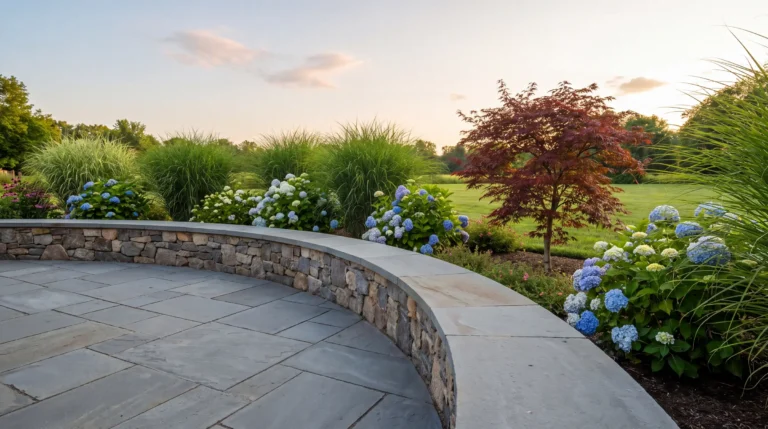
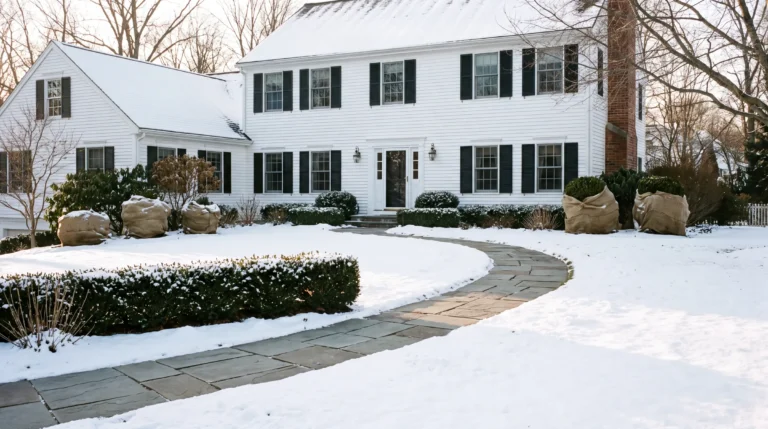
Low maintenance landscaping in Connecticut comes down to a few choices: plant natives and shrubs that fit their space, cover bare soil with mulch or groundcovers, lock in clean edges, and mow less lawn. Get those right and a typical eastern CT yard needs a spring cleanup, a fall cleanup and light touch-ups in between, instead of every weekend.
At a glance
- Pick native, zone 6 plants that handle our cold winters, humid summers and rocky soil.
- Choose shrubs by mature size so you are not pruning them back every year.
- Keep 2 to 3 inches of mulch on beds and fill gaps with groundcovers to shut out weeds.
- Install steel or stone edging so grass stops creeping into beds.
- Shrink the lawn in shade, on slopes and over ledge, and water beds with drip lines.
What makes low maintenance landscaping work in Connecticut
A yard gets high maintenance when plants fight the site. Sun lovers in shade, thirsty plants on dry ledge, and big shrubs jammed against the house all create work. The fix is to match the plant to the spot and cover every square foot of soil with something: plants, mulch, stone or lawn you actually use.
Connecticut sits mostly in USDA zones 6a and 6b. Anything you plant has to take real cold, freeze-thaw swings in late winter and the odd summer dry spell. Plants rated for zone 5 or 6 give you a safety margin.
Plant natives and the right shrubs
Native plants are adapted to local soil, rainfall and pests. Once they are established they need less water, less fertilizer and less spraying than a lot of what gets sold at big box stores.
Reliable natives for eastern CT
- Shrubs: mountain laurel, inkberry holly, winterberry, highbush blueberry, summersweet (clethra)
- Perennials: New England aster, black-eyed Susan, bee balm
- Grasses: switchgrass and little bluestem, which also shrug off road salt near the street
- Shade: Christmas fern and Pennsylvania sedge under trees where grass struggles
Buy for mature size
Most pruning chores come from a shrub that was too big for its spot on day one. Read the tag for mature height and width and plant to that, not to how it looks in the pot. A dwarf variety under a window beats a full-size shrub you have to shear twice a season.
Skip the invasives
Burning bush and Japanese barberry both show up on Connecticut’s invasive plant list. They spread into nearby woods and you end up pulling seedlings for years. Native swaps like winterberry or inkberry give you color and structure without the cleanup.
Rather have a crew handle it? High Vibe Gardens does this work across eastern Connecticut. Get a free walkthrough and same-day quote or call (860) 791-3191.
Mulch, groundcovers and edging
Bare soil grows weeds. Covering it is the single biggest time saver in any low maintenance landscape.
Mulch the right way
- Spread 2 to 3 inches of shredded bark or wood mulch on beds. Organic mulch breaks down slowly and feeds the soil.
- Pull mulch back a few inches from tree trunks and shrub stems. No volcano mulching. Mulch piled against bark holds moisture and invites rot and rodents.
- Top off rather than piling on. If last year’s layer is still 2 inches deep, rake it loose and add a thin refresh.
- Shredded leaves from your own yard make a free mulch for beds in fall.
Mulch or stone?
Mulch feeds the soil and is kinder to plants. Stone lasts longer but holds heat and gets full of leaf litter under trees. Many yards do best with a mix: stone along the foundation drip line or a walkway, mulch in the planting beds.
Groundcovers fill the gaps
Creeping thyme and sedum work in hot, sunny spots. In shade, use sedge or ferns. Once groundcovers knit together they block weeds better than mulch alone.
Hard edges save hours
Steel, stone or paver edging keeps turf out of beds and gives the mower a clean line to follow. A defined border between lawn and bed cuts trimming more than almost anything else. Set edging deep enough that frost heave does not push it up after a hard winter.
Reduce your lawn and let hardscape do the work
Turf is the most work per square foot in most yards. It needs mowing, feeding, weeding and watering. Keep the lawn you use for play and paths, then convert the rest.
- Shade under big oaks and maples: turn thin, mossy grass into a mulched bed with ferns and sedge.
- Steep slopes: plant low shrubs and groundcovers instead of mowing a hill.
- Ledge and shallow soil: grass burns out here every summer. A planted bed or stone area holds up better.
- Walkways and patios: stone, pavers or gravel add structure and remove turf you would otherwise mow.
- Low retaining walls: terrace a slope into flat planting beds that are easy to reach and mulch.
Where you keep grass, use a seed blend suited to your sun and shade so it needs less help.
Water smarter with drip irrigation
Hand watering beds all summer is a chore most people quit by July. Drip irrigation puts water at the roots and wastes very little to evaporation.
- Run drip lines or soaker hoses under the mulch in planted beds.
- Add a simple timer, or a moisture sensor so it skips a day after rain.
- Set rain barrels at downspouts to catch water for beds and containers.
- Natives usually need regular water only for their first season or two, then just during long dry spells.
Low maintenance landscaping tips for eastern Connecticut yards
Yards in Hebron, Columbia, Tolland, Mansfield and the towns around them share a few quirks worth planning for.
- Rocky glacial till and ledge. Digging is slow and soil can be thin. Build up beds with good soil and compost instead of fighting every rock.
- Clay pockets. Low spots stay wet in spring. Choose plants that tolerate wet feet, like winterberry and summersweet, or fix the grading first.
- Heavy leaf drop. Wooded lots bury beds every fall. Plan for a fall cleanup and shred leaves into mulch where you can.
- Deer. Deer pressure is high in rural towns. Lean on plants deer tend to pass over, like switchgrass, bee balm and ferns.
- Road salt and nor’easters. Use salt-tolerant grasses near the road and keep brittle, top-heavy shrubs away from spots where snow gets piled.
Seasonal care still matters
Low maintenance does not mean no maintenance. It means a few well-timed visits instead of constant work.
- Spring cleanup: cut back perennials and grasses, clear winter debris, refresh mulch and prune what needs it.
- Summer: pull the occasional weed and check drip lines.
- Fall cleanup: remove leaves from lawn and beds and tuck plants in with mulch before winter.
- Feeding: keep it light. A slow-release fertilizer only when plants show a need.
When to call a pro
Most homeowners can plant a few perennials. The bigger jobs are where a crew saves you time and mistakes: stripping sod to make new beds, hauling in soil over ledge, setting edging straight, or building a wall to terrace a slope. We handle garden bed planting and mulching and landscape and lawn maintenance, and we do retaining walls and excavation with our local partner Tom Sullivan.
High Vibe Gardens is a family-owned crew based in Hebron, fully insured with $2M in liability coverage and 6 industry certifications. If you are in town or nearby, see our landscaping services in Hebron, CT. We will walk your yard for free, share design ideas and give you a same-day quote. Call or text (860) 791-3191 or request your free walkthrough.
Common questions
What is the lowest maintenance landscaping for a Connecticut yard?
Mulched beds planted with native shrubs and perennials, clean steel or stone edging, and less lawn. Covering all bare soil with plants, mulch or stone does more to cut work than any single plant choice.
Will native plants look good year-round?
Yes. Many go dormant in winter, but evergreen shrubs like mountain laurel and inkberry, plus the stems and seed heads of grasses and perennials, keep structure in the yard all winter.
Is mulch better than rock for low maintenance beds?
Mulch feeds the soil and is kinder to plants, while rock lasts longer but holds heat and traps leaves. A mix often works best: stone along walkways or the foundation, mulch in planting beds.
How deep should mulch be?
Keep it 2 to 3 inches deep and pull it a few inches back from trunks and stems. Deeper piles, especially volcano mulch against tree bark, hold moisture and lead to rot.
How do hardscape and edging handle freeze-thaw cycles?
When they are installed on a proper base with good drainage, they hold up well. Shallow edging and walls without a solid base are the ones that heave after a hard winter.